c-84, sector 65, Noida
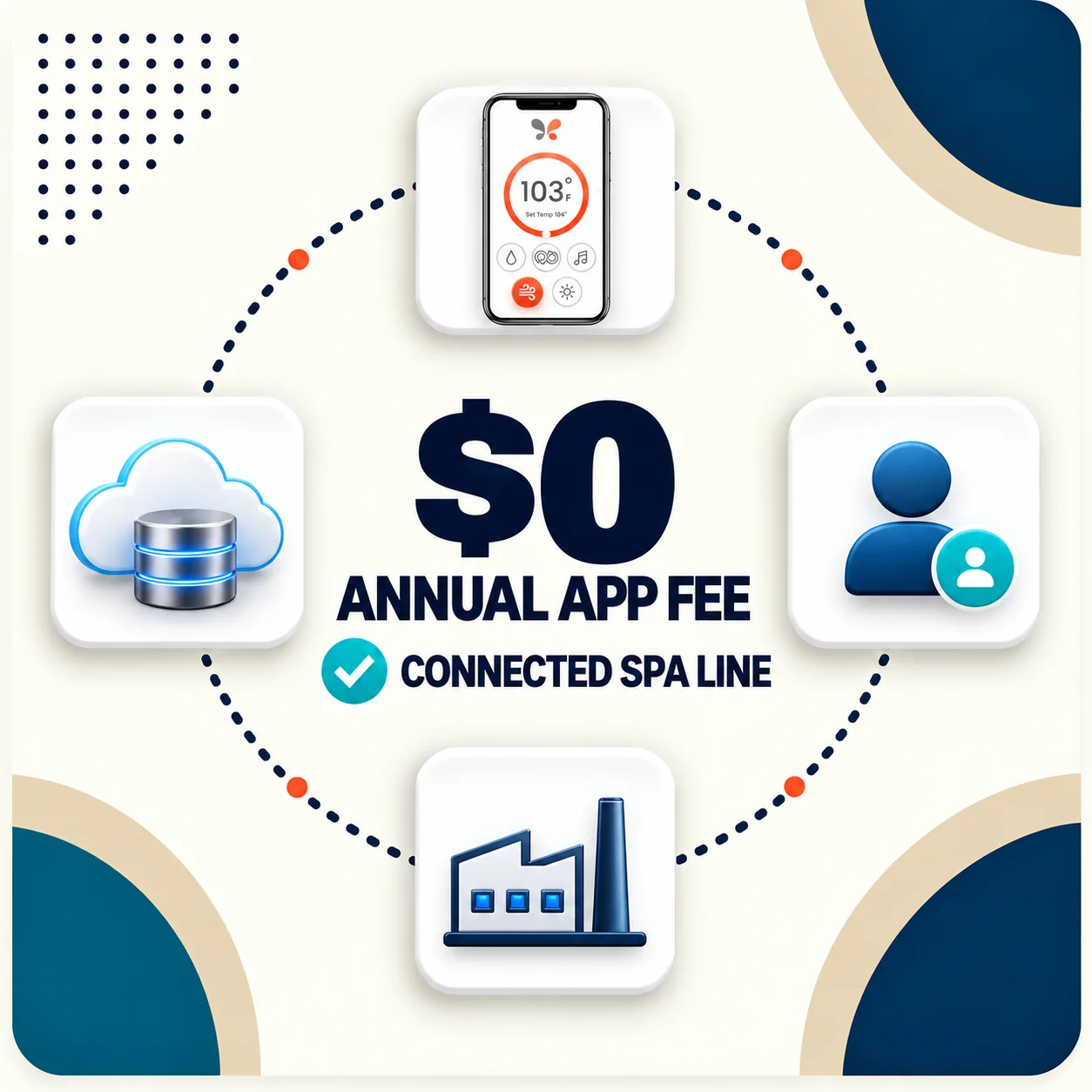
Clixlogix migrated 1,400 connected spas onto PTC ThingWorx on AWS, unified two brand apps on one codebase per platform, and ended the annual owner fee.
At the opening of the engagement, the Client ran its connected spa program for both consumer brands on a legacy Digi cloud, with duplicate native codebases per brand across iOS and Android and a cost structure that passed an annual subscription fee onto owners. Clixlogix diagnosed the architecture, replatformed the IoT backend onto PTC ThingWorx on AWS, unified the two brand apps onto one modular codebase per native platform with brand specific configuration, and migrated roughly 1,400 legacy spa units over the air with no technician dispatch. The program removed the owner subscription fee on the connected spa line and reseated both connected apps on an architecture the Client’s product team continues to extend.
The Client is a long established manufacturer at the premium end of the hot tub and connected spa market, operating from its US headquarters in Southern California. It runs two consumer spa brands that carry separate identities, separate design languages and separate dealer networks, and it sells through a specialty dealer channel across the United States and Canada. Both brands carry connected product lines that owners control from mobile apps on iOS and Android.
The channel shape matters to how the connected products work. The Client sells through independent specialty dealers, so the dealer who installs a spa usually holds the first service relationship with its owner. A connected spa therefore carries two support paths from the day it is switched on, one to the installing dealer and one to the manufacturer, and the app has to route each owner question to the right one.
The product category sets the engineering constraint. A spa is a durable good that stays in place for years after a single installation, so the installed base outlives several generations of cloud platform and mobile operating system. Any connected spa program therefore accumulates a field population that no replacement cycle will refresh, and the cost of reaching those units in person rises with the size of the fleet. That constraint shaped every architectural decision on this engagement.
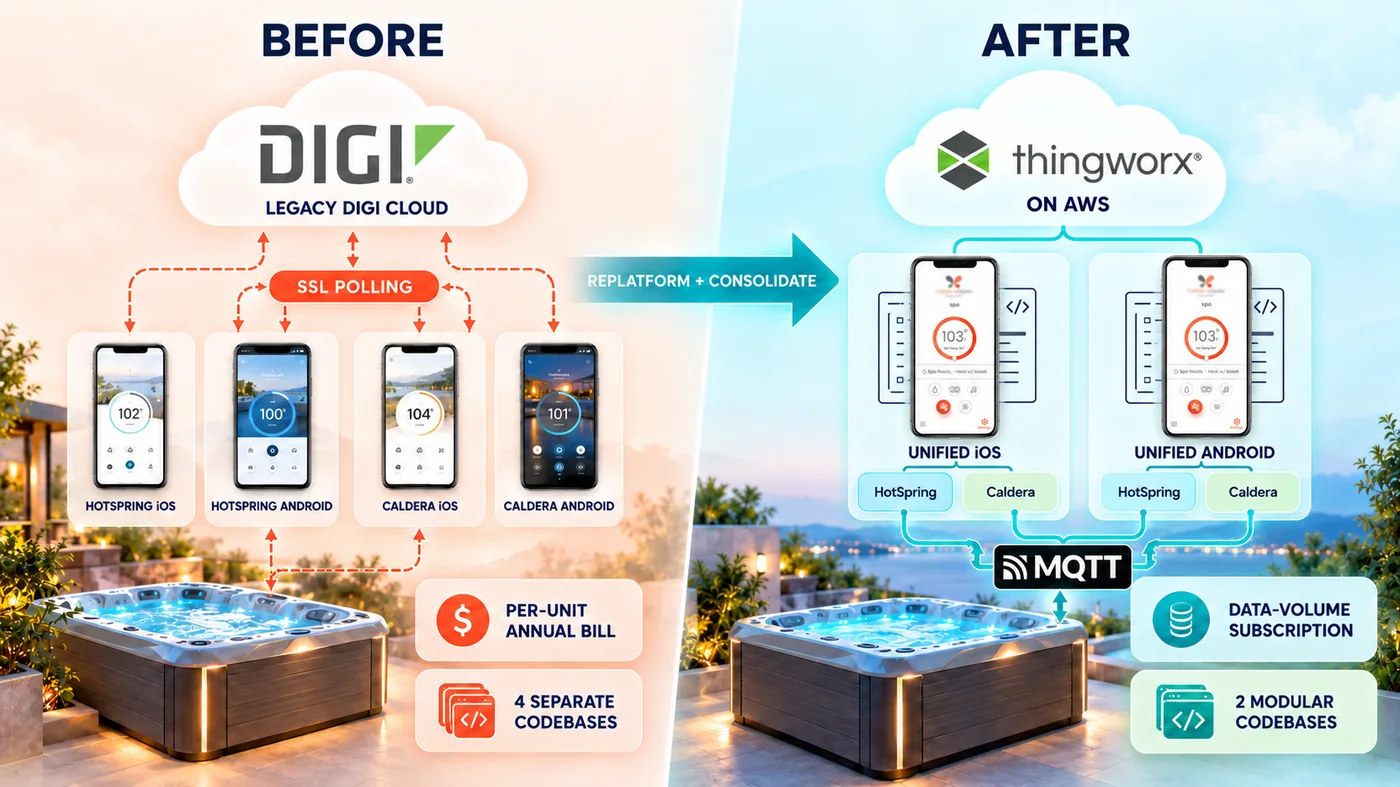
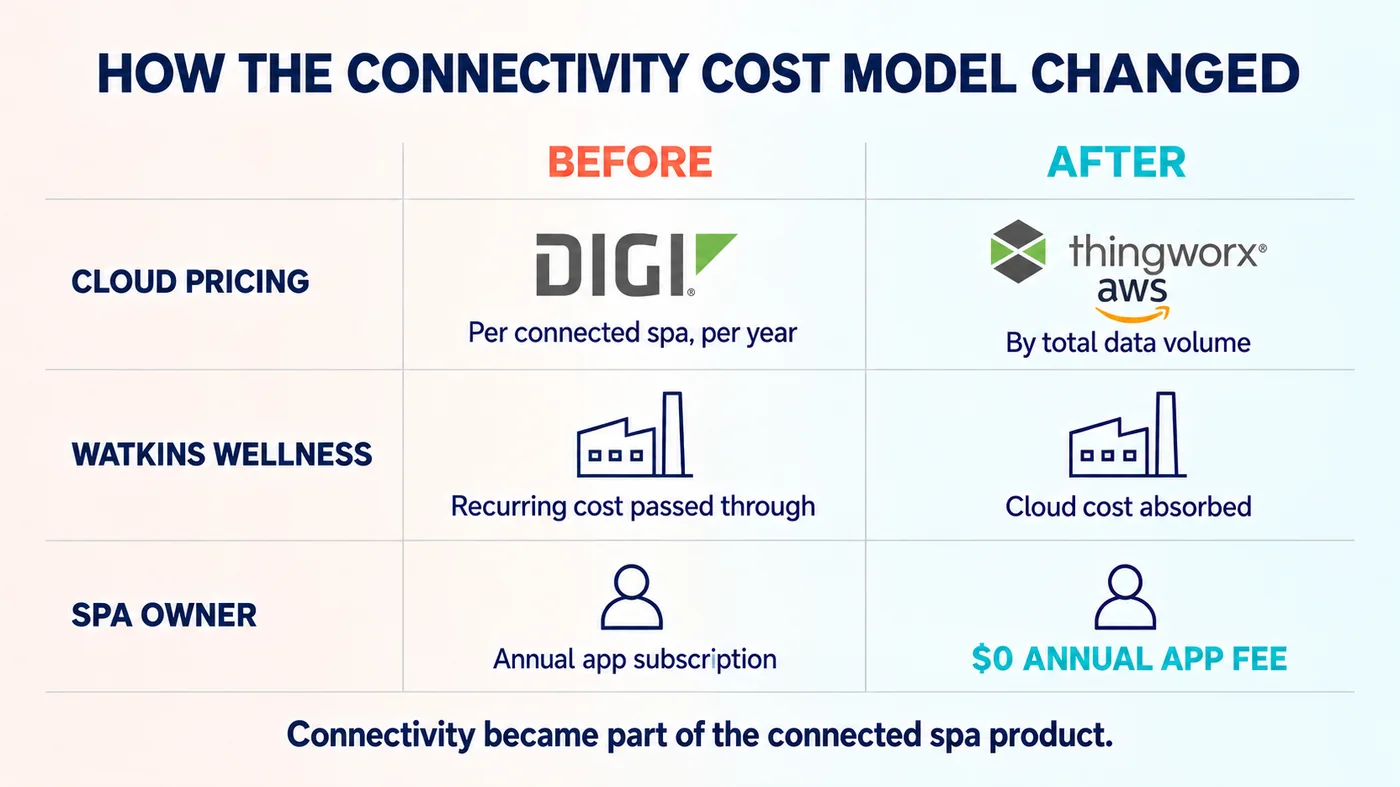
The connected spa experience ran on a Digi cloud architecture where each unit on the cloud billed the Client per unit per year. The connected products group had passed the cost through to owners as an annual subscription, which placed the connected feature set in a different commercial category from the free app surfaces owners expected from other connected consumer products.
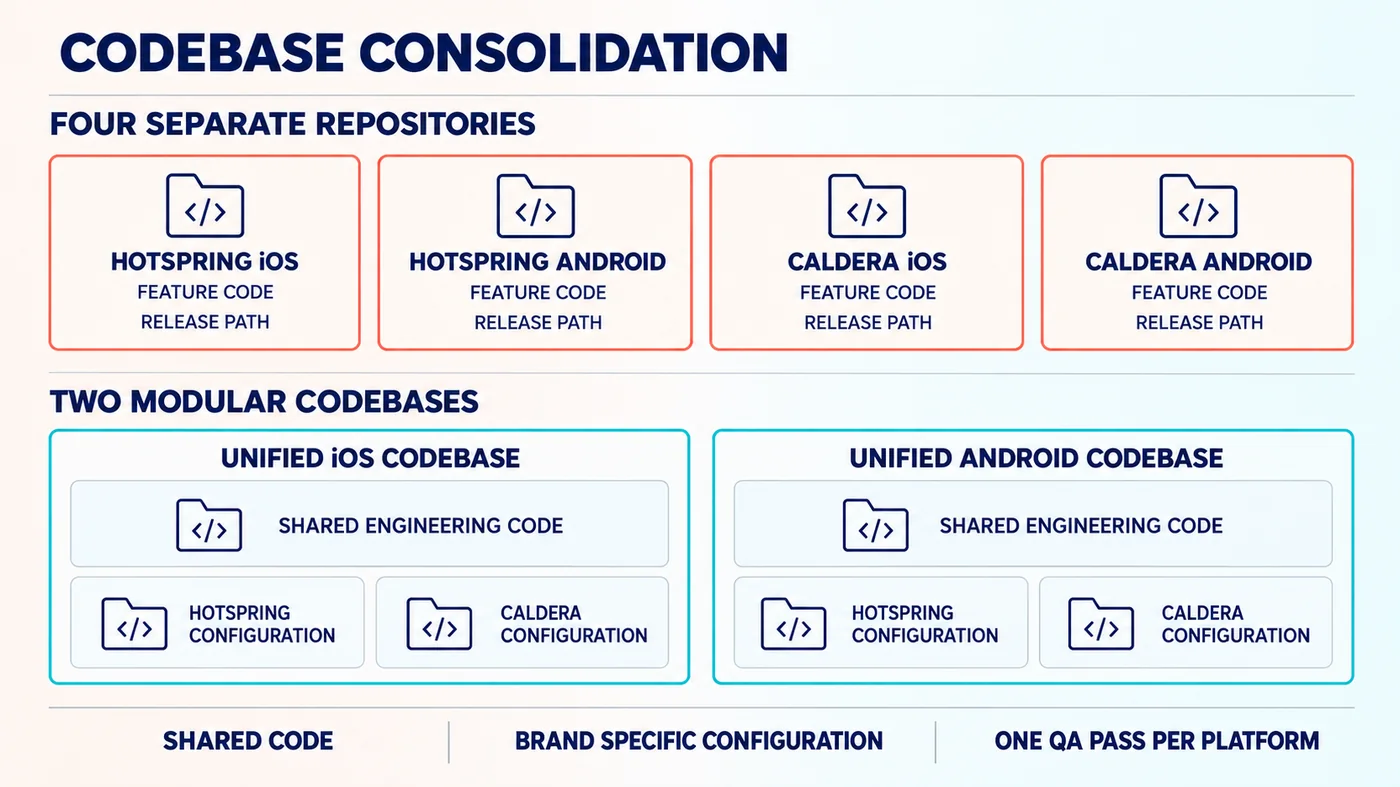
The two brand apps shipped as two separate iOS codebases and two separate Android codebases, so a single feature change required four parallel builds, four App Store or Google Play reviews, and four regression passes. The engineering group carried a feature cost that scaled with brand count, which further strained the economics behind the owner fee.
The app to device channel ran on an SSL polling connection between the Hardware Network Appliance inside each spa and the Digi cloud. The connection drove bandwidth cost per unit, delayed remote commands by seconds past the owner’s tap, and did not carry a reliable device heartbeat the Client’s support organization could trust.
Roughly 1,400 connected spa units already sat in the field at owner locations. The Hardware Network Appliance firmware had no over the air route to redirect from Digi to a replacement cloud, so a cloud migration risked stranding the installed fleet at owner locations or forcing a technician visit per unit.
Fig 1 - Pre and post engagement architecture for the connected spa line
Device Trust Baseline
Connected consumer devices in the US operate under published federal cybersecurity capability baselines. NIST IR 8259A, the US National Institute of Standards and Technology core device cybersecurity capability baseline for IoT, sets the capability baseline for device identification, device configuration, data protection, logical access to interfaces, software update, and cybersecurity state awareness. A connected spa line held to that baseline carries direct implications for how the IoT cloud, the device firmware, and the owner mobile apps are architected.
| Axis | Before the engagement | After the engagement |
|---|---|---|
| Owner commercial posture on the connected app | Annual subscription fee paid by owners to keep connected features active | Connected app free to owners on the connected spa line, with no per unit cloud bill in the way |
| Cloud operator for the connected spa fleet | Digi managed IoT cloud with per unit annual billing | PTC ThingWorx on AWS under the Client’s control, cloud subscription priced on data volume |
| Mobile app delivery across the two brands | four codebases, two platforms times two brands, four store artifacts per release | One modular codebase per native platform, two store artifacts per release under brand identity |
| App to device communication protocol | SSL polling with bandwidth cost per unit and command latency measured in seconds | MQTT with a reliable device heartbeat and command delivery measured in seconds end to end |
| Spa provisioning on new installations | Dealer or technician keyed the serial by hand at install, with ad hoc pairing | Barcode scan reads the serial on the hardware label and verifies pairing against the ThingWorx registry before the first command |
| Owner support routing inside the app | Manufacturer handled every owner contact, including dealer service questions | Dealer locator routes service questions to the owning dealer and routes product questions to the manufacturer |
| Legacy fleet onboarding under a cloud migration | No route available, a cloud migration would strand existing units or need a technician visit per unit | Over the air repoint moves installed units with no owner action and no technician dispatch |
Table 1 - Pre and post engagement axes for the connected spa line
Clixlogix opened the engagement with a working session that mapped the Digi cloud integration, the four app codebases, the SSL polling flow between the Hardware Network Appliance and the cloud, and the owner subscription billing path. The Client’s technical consulting team worked alongside Clixlogix as the direct engagement counterpart from this stage through the Transition handover, with the connected products group as the business owner of the connected spa line. The Diagnose stage captured the four findings in a shared register, inventoried the installed fleet by firmware revision and brand, and ran a feasibility check on PTC ThingWorx as the replatform target.
At the end of this stage the Client’s connected products group owned an architecture assessment of the Digi integration, a four codebase redundancy analysis, a device to cloud protocol audit, and a feasibility note on PTC ThingWorx as the replatform target.
Clixlogix sized the ThingWorx data model for the combined device fleet, specified the MQTT protocol boundaries between the Hardware Network Appliance firmware and the new cloud, defined the shared codebase architecture for the two brand apps with brand specific configuration resources, and sequenced the over the air repoint approach that would move the installed fleet off Digi.
At the end of this stage the Client’s connected products group owned a ThingWorx data model aligned to the device fleet, an MQTT protocol specification, a shared codebase architecture for the two consumer apps, and a legacy fleet migration plan.
Clixlogix built the ThingWorx entity model on AWS, migrated the Python Hardware Network Appliance code to speak MQTT to ThingWorx while preserving the on device user experience, and assembled the unified mobile codebase per native platform with the two brand apps as two brand configurations. Core app surfaces delivered covered water temperature, filtration cycles, Boost, mood lighting, music control, and an administrative dashboard with user and device oversight for the Client’s operations group. Access roles separated Spa Owner from Spa Guest so a household could issue a limited control grant to a family member or houseguest without opening the full administrative surface.
At the end of this stage the Client’s connected products group owned a running ThingWorx cloud environment on AWS, Python Hardware Network Appliance firmware wired to MQTT, and a working unified app binary covering both consumer brands.
Clixlogix walked the Client’s security team through a review of the APK and IPA artifacts, resolved the findings before resubmission, and ran phased validation on the ThingWorx QA cloud with a controlled slice of legacy and new spa units. The Harden stage also exercised the over the air repoint path on a staging fleet to confirm legacy units could migrate from Digi to ThingWorx with no owner action.
At the end of this stage the Client’s connected products group owned signed off APK and IPA builds, a validated QA ThingWorx environment, and a tested legacy repoint procedure.
Clixlogix sequenced the production migration of legacy units in batches, confirmed each batch had reconnected and resumed heartbeat on ThingWorx, moved net new installs onto the barcode scan provisioning path, and handed the operational runbook to the Client’s support organization. Clixlogix cut over the dealer routing and manufacturer routing paths inside the app during the same window.
At the end of this stage the Client’s connected products group owned a fully migrated connected spa fleet on ThingWorx, a published provisioning runbook, and an operational handover record signed with the support organization.
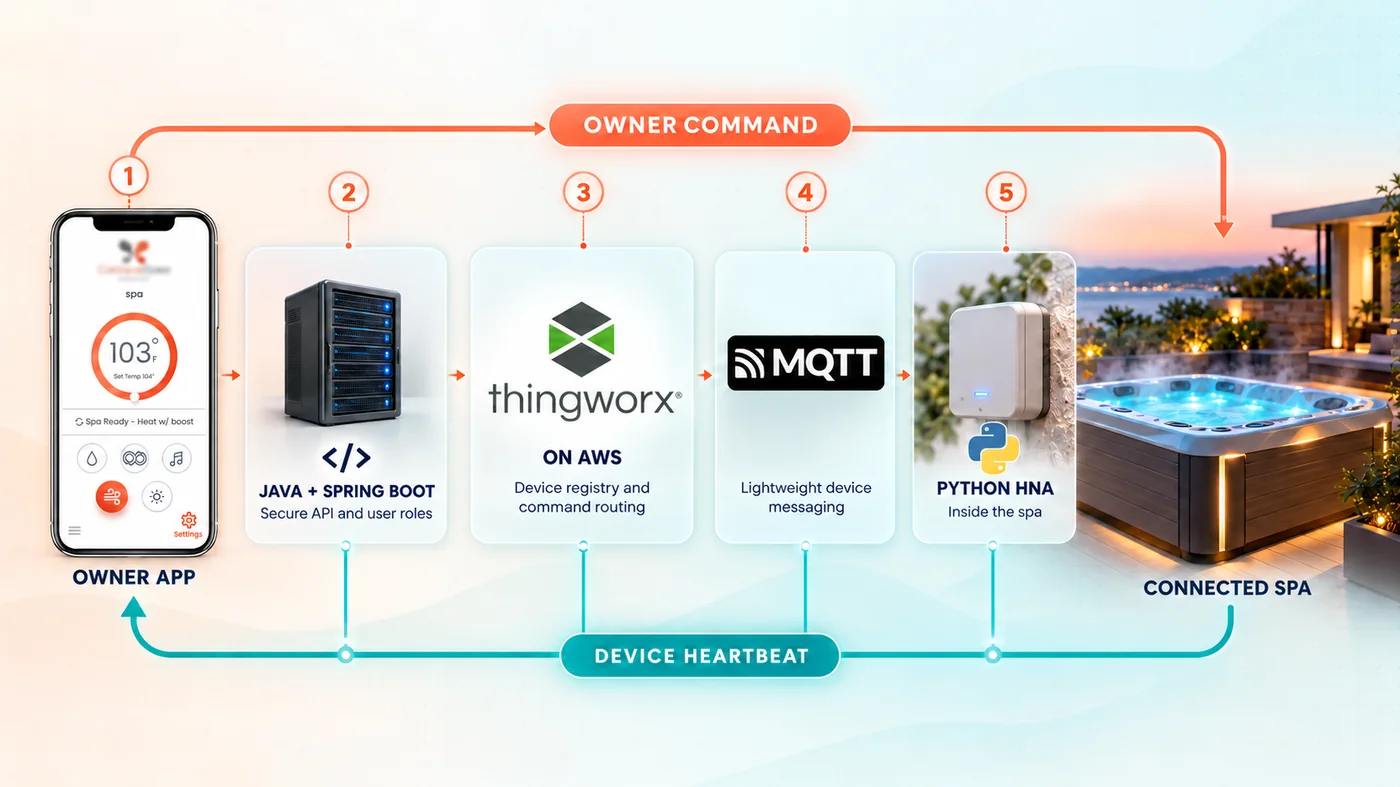
Fig 2 - Owner command and device heartbeat path on MQTT
Clixlogix held daily synchronization sessions with the Client’s technical consulting team embedded on the program and weekly sprint reviews with the hardware group. The sessions kept the development work on AWS and ThingWorx aligned with the physical constraints of the spa controller hardware, which was the single largest source of integration risk on the program.
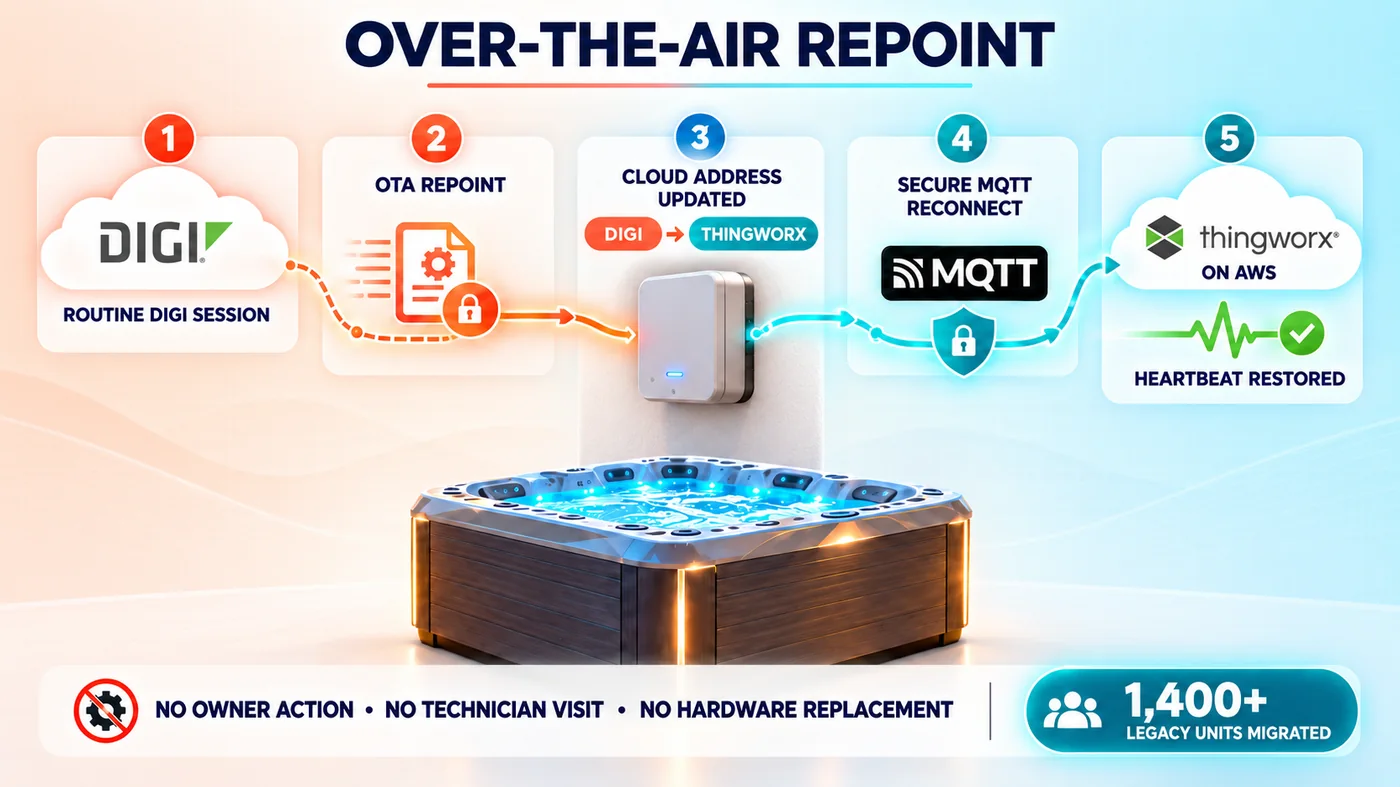
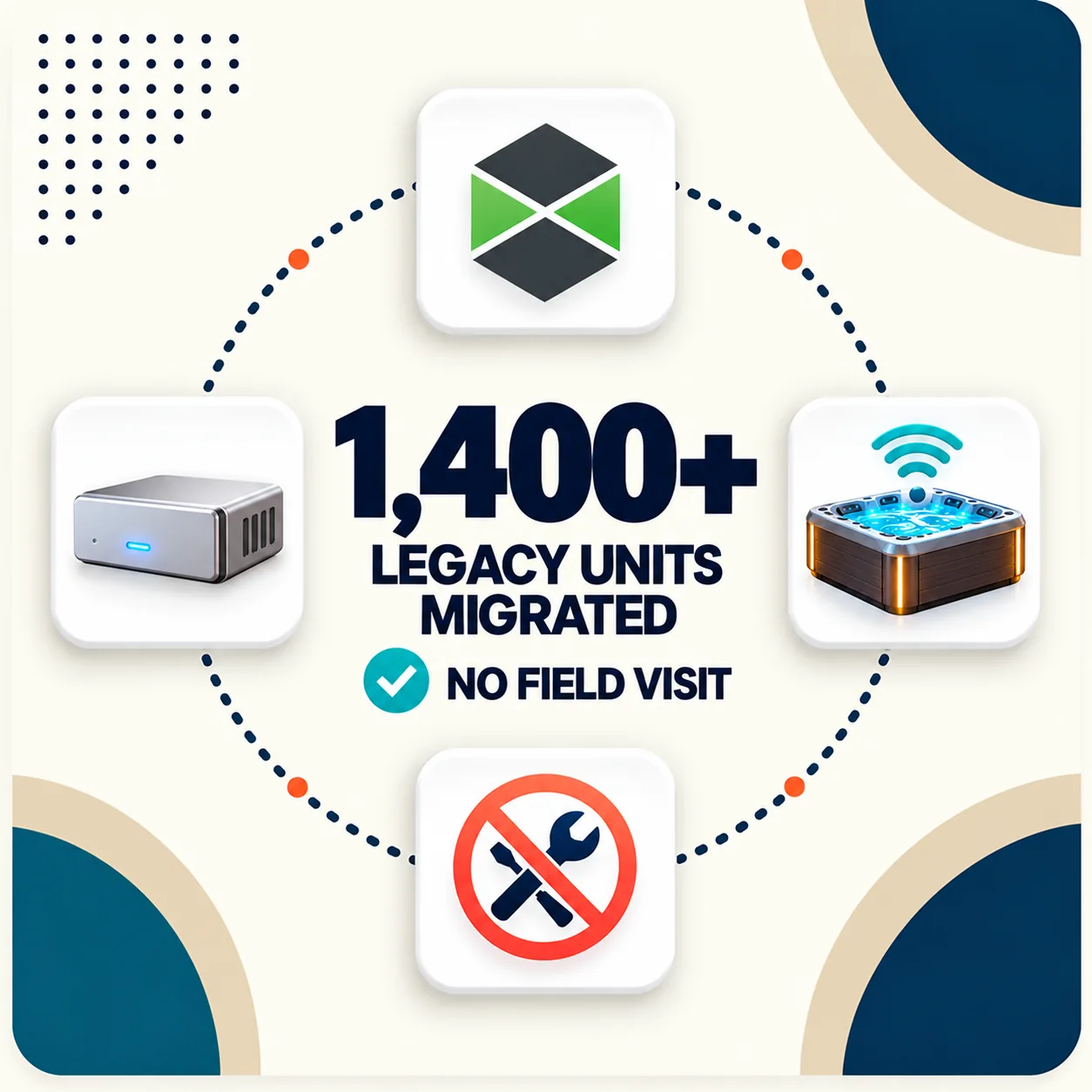
The migration strategy held the over the air repoint as a hard constraint. Clixlogix exercised the over the air repoint path on a controlled staging fleet before the production rollout, then moved 1,400+ units off the Digi cloud with no technician visit and no owner action.
IoT programs carry inherent security risk when household data moves across cloud and device surfaces. During the Harden stage, Clixlogix ran security audits on all application artifacts and operated a feedback loop with the Client’s security team to resolve findings before production deployment.
Clixlogix produced a standardized provisioning runbook, cut over the dealer routing and manufacturer routing paths inside the app, and handed a signed support handover to the Client’s support organization. The deliverable at close was an operational asset the Client’s support organization could run on its own.
The Client required a cloud that supported the installed Hardware Network Appliance firmware with low rewrite cost, carried device fleet management features out of the box, and allowed the connected products group to retire the per unit subscription with no firmware replacement across the installed base.
ThingWorx carried a device model, event rule configuration, and remote device management surface that matched the connected spa product shape with limited custom build. Digi stayed on a per unit billing model that would have kept the owner subscription in place. AWS IoT Core would have required the Client to build the fleet administration surface from scratch and extend firmware beyond the available development budget. Azure IoT Hub carried the same construction cost as AWS IoT Core and introduced a cloud vendor change that extended procurement timelines.
The Hardware Network Appliance running inside each spa required a protocol that carried a lightweight heartbeat, delivered remote commands within seconds of a user action in the app, and ran inside the existing CPU and memory envelope of the spa controller.
MQTT ran inside the spa controller envelope, carried a reliable heartbeat under the ThingWorx subscription, and delivered command round trips measured in seconds. SSL polling drove bandwidth cost per unit and would have left the per unit billing model intact under ThingWorx. AMQP carried heavier framing than the Hardware Network Appliance CPU budget could absorb at the heartbeat cadence the Client required. ThingWorx AlwaysOn would have forced a wider firmware change on every legacy unit, which conflicted with the over the air repoint goal for the installed fleet.
The Client required a single engineering backlog across both consumer brands, two App Store and Google Play listings under distinct brand identity, and the ability to ship a feature once and verify once.
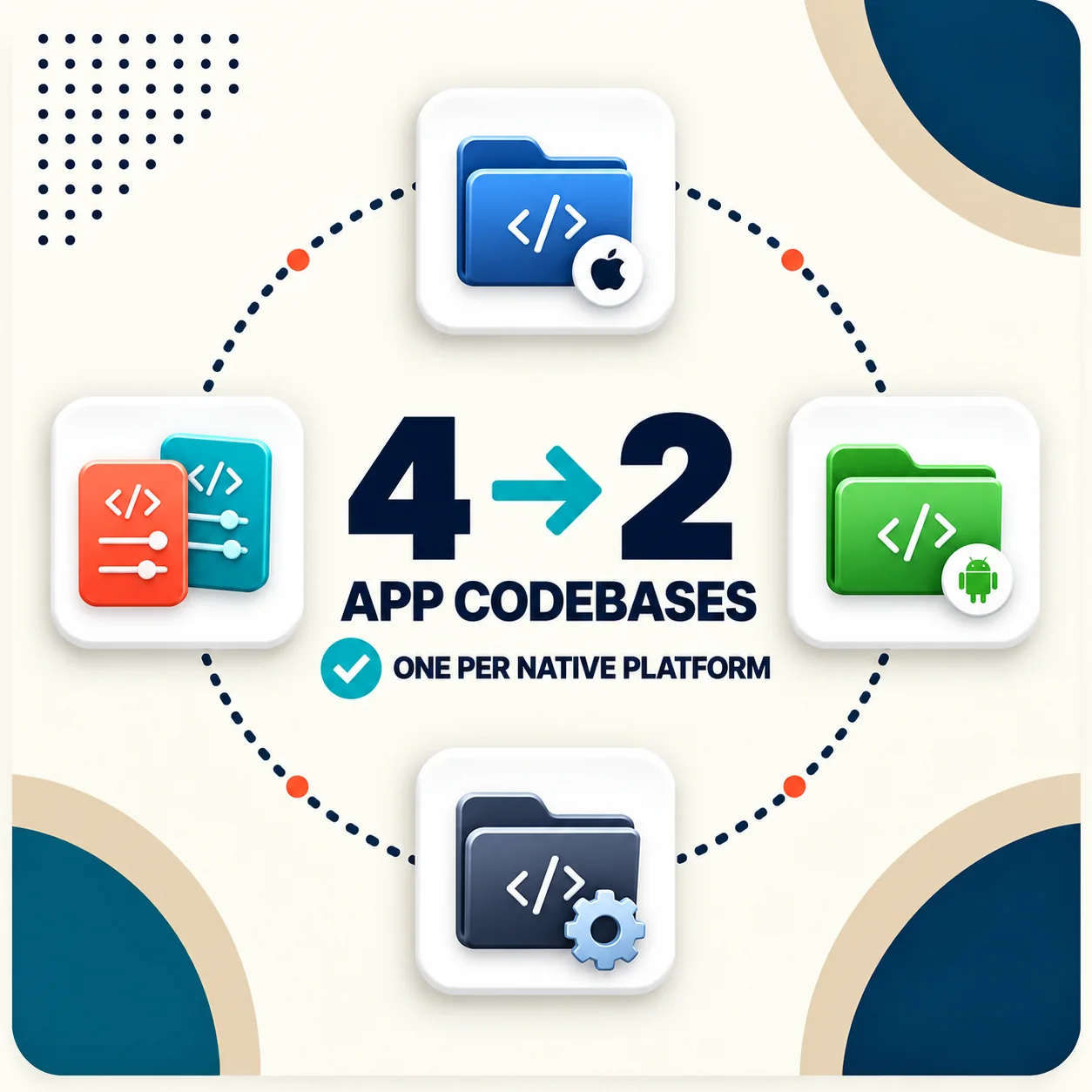
One modular codebase per native platform cut the parallel build count from four to two, kept each release behind a single QA pass per platform, and let the design team swap brand assets at a configuration file level with no change to engineering code. Four separate codebases carried the duplicated engineering cost that drove the subscription in the first place. Fork per release pushed merge debt back into the engineering group on every brand divergence.
Any migration path had to clear the installed Digi fleet off per unit billing with no technician dispatch to every owner.
An over the air repoint delivered the migration inside the normal connected session each spa opened to Digi, so the owner saw no interruption and the migration completed with no owner action. A technician visit per unit multiplied the migration cost by the fleet size and extended the subscription unwind by months. Dealer coordinated owner self install carried a completion risk the Client could not absorb at the fleet scale. Phased hardware swap tied the migration to natural service cycles and would have left the owner subscription in place for years.
Fig 3 - Over the air repoint sequence for the installed fleet
The Client opened the engagement with a direct commercial goal, ending the owner subscription fee on the connected spa line. The fee existed because every unit on the Digi cloud billed the Client per unit per year, and the connected products group had passed the cost through to owners. The replatform to PTC ThingWorx on AWS replaced the per unit billing posture with a Client owned cloud subscription that priced on data volume. Clixlogix sized the ThingWorx subscription against the combined fleet, modeled the message rate under MQTT, and confirmed the data volume economics before the Architect stage closed. The owner subscription for the connected spa line came off at launch of the replatformed app, and the Client’s commercial organization repositioned the connected spa line against the connected consumer product substitutes owners compared it against.
Fig 4 - Commercial model shift from per unit cloud billing to a data volume cloud subscription
Owner Expectation Posture
The US connected consumer products market now carries explicit federal signaling on connectivity as a product feature across a device’s connected life. The FCC voluntary US Cyber Trust Mark program applies to connected consumer electronics marketed in the US and sets labeling criteria tied to the device’s security posture across its connected life. The Client’s connected spa line sits inside this category, and the replatform reseated the owner relationship on terms the connected consumer products market now expects.
The two brand apps carry the same functional surface for connected spa owners, with brand specific identity and dealer routing. Clixlogix built a single modular codebase per native platform where the brand configuration file carries the color palette, the typography, the dealer directory binding, and the manufacturer address, and shared code decides the hardware control flow and the user experience. The release pipeline runs one engineering backlog and produces two signed store artifacts per release. Each artifact goes to Apple App Store and Google Play under its own brand identity. The Client’s engineering group now ships a feature once and verifies once, with brand divergence confined to a configuration file.
Fig 5 - Codebase consolidation from four repositories to one modular codebase per native platform
The Client carried roughly 1,400 connected spa units installed at owner locations under the Digi cloud. Clixlogix built the over the air repoint procedure inside the Harden stage, exercised it on a staging fleet, and rolled it to production in batches. Each batch of units reconnected to ThingWorx inside its normal session with no owner action and no technician dispatch. Batch confirmation gated on heartbeat count on ThingWorx and command round trip verification per unit. The complete installed fleet migrated inside the Transition stage with no field service call.
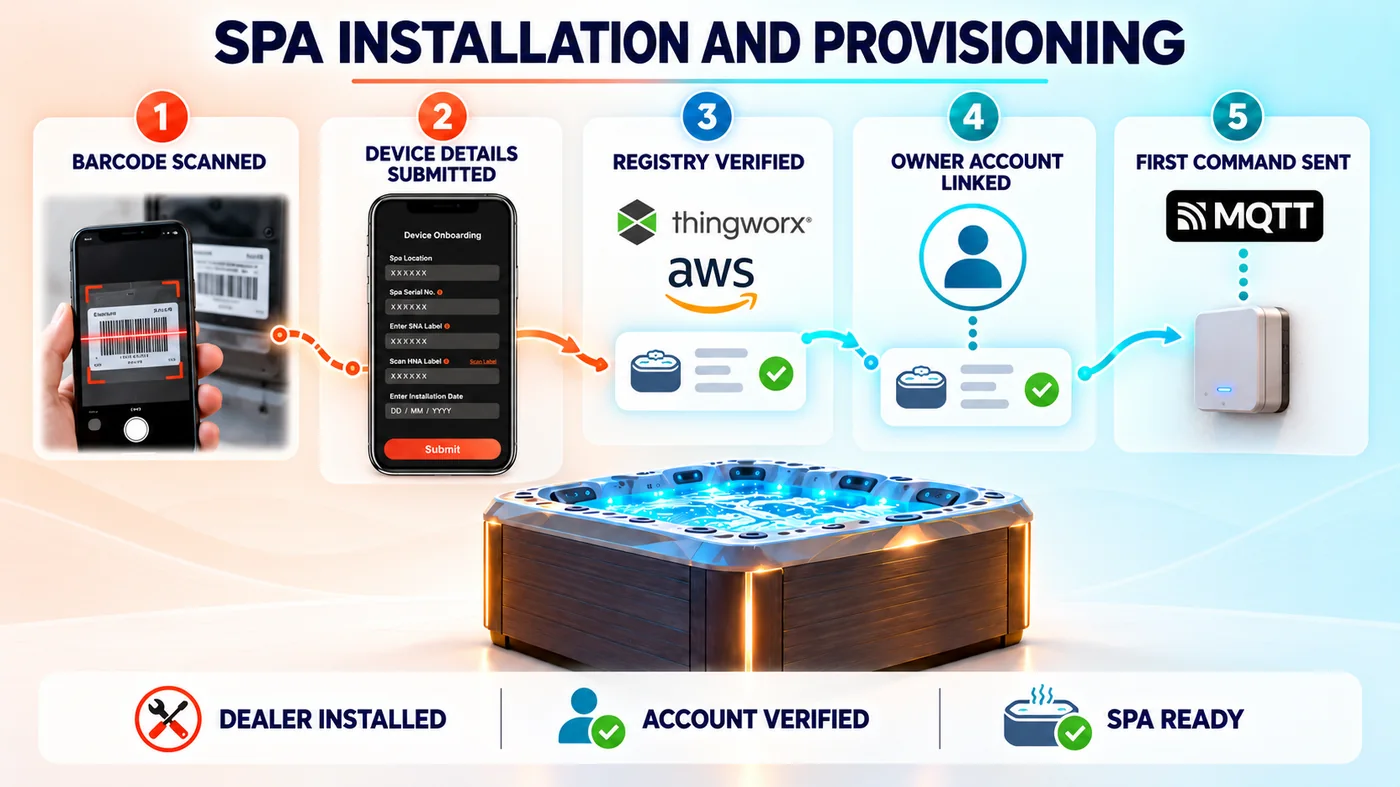
New spa installations under the replatform run on a barcode scan provisioning flow. The dealer or installer scans the serial on the hardware label at install, the app verifies the pairing against the ThingWorx registry, and the owner account binding completes before the first command. At activation the owner record is pushed to the Client’s existing Salesforce instance, which holds customer registration. Owner support routing inside the app sends dealer service questions to the owning dealer identified by the dealer locator and sends manufacturer questions to the Client’s support organization. The two routes cut the Client’s support load on first touch dealer tickets, and the barcode flow replaced the ad hoc install pairing that had generated support incidents on the Digi line.
Fig 6 - Owner installation and provisioning flow
The engagement moved the connected spa line onto an owned IoT architecture, cleared the installed fleet off the legacy cloud with no field dispatch, and retired the owner subscription fee.
| Area of the engagement | What ran there |
|---|---|
| IoT cloud for the connected spa fleet | PTC ThingWorx on AWS |
| Device to cloud communication protocol | MQTT, replacing the legacy SSL polling connection |
| Hardware Network Appliance firmware | Python |
| Mobile apps for the two consumer brands | Native iOS (Swift) and native Android (Java) |
| Backend services carrying owner, device, and dealer records | Java Spring Boot |
| Administrative web interface for user and device oversight | AngularJS |
| Relational data store for owner, dealer, device, and content records | Microsoft SQL Server |
| Authentication and authorization for app and admin surfaces | Spring Security with JWT |
| Device provisioning on new installations | Barcode scan with ThingWorx registry lookup |
| Customer registration record at activation | The Client’s existing Salesforce instance, receiving a record push |
| Owner support routing inside the app | Dealer locator service with manufacturer handoff |
| QA environment for replatform validation | Phased ThingWorx QA cloud with staged device cohorts |
Table 2 - Technologies and tools across the connected spa engagement
Our team can share client references, scope your project, and answer any question about your delivery.
More engagements where our delivery teams shipped similar outcomes for clients across industries. Read on for context on the patterns we reused, the trade offs we navigated, and the metrics that landed in production.